David Attenborough and Marilyn Monroe have one thing in common, but it’s a biggie. Both of them were born in 1926. Just think, if the fates had been less fickle we might now be celebrating Monroe’s 100th birthday too. What would she have looked like? What would she be doing?
On second thoughts, let’s not go there. It’s too cruel a projection. Some candles were not made for lengthy flickering. They were made for burning out long before their legends ever will.
So instead of a birthday party we have a Marilyn blockbuster at the National Portrait Gallery that is packed to the rafters with her image. The show goes down various alleys and has several twists. But it ends up coming to the simplest of conclusions: boy, did the camera love her.
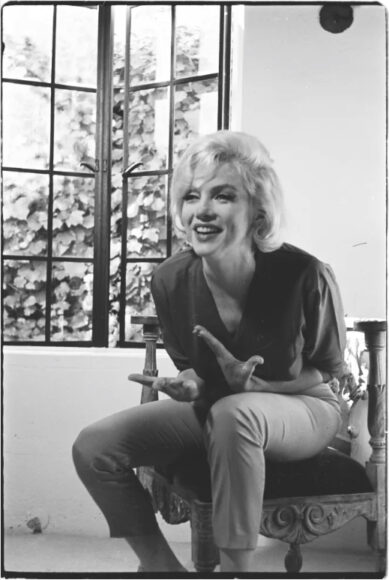
Being photogenic is a kind of magic. Those of us who don’t have it can only wonder at the mystery of those who do. Meet Kate Moss in the street and she might walk past you unrecognised. See her in a photo and the alchemy has made her unmissable. And that’s what Monroe had: a photographic magic so profound it cannot be repeated.
Think of all the beautiful actresses who have come and gone since The Seven Year Itch was released in 1955. Think of all the It girls and supermodels, the centrefolds and faces of the year, who were helloed one minute, goodbyed the next. Yet Monroe and her legend burn on. It’s a remarkable feat of photographic longevity, well worth the superior investigation it receives at the NPG.
In a clever bit of exhibition craft the curators have grouped the seemingly countless portraits of her according to the photographers who took the pictures. Each brought their own flavour to the task, and each is given their own stretch of evidence.
We start with Philippe Halsman, who was lucky enough to encounter her when she was still plain Norma Jeane Mortenson. No father. Unstable mother. Passed from orphanage to orphanage, an unfixed presence with a tearful past. One of her signature looks was “vulnerable”, and there was plenty to feel vulnerable about.
However, the gods that took away with one hand gave with the other, and when Halsman photographed her in 1949, along with a giggly gang of aspiring Hollywood starlets, she was the one who shone the brightest.
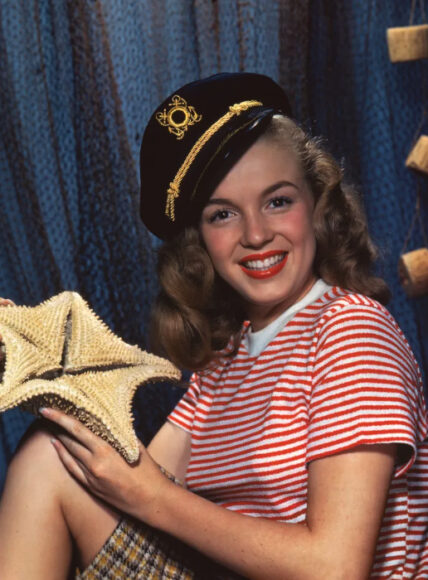
That said, she didn’t yet look fully like Marilyn Monroe. It took me several journeys backwards and forwards between early Halsman and late Halsman to confirm that she must have had some work done on her chin. Norma Jeane’s chin lacked the clarity of Marilyn’s.
Her hair was, of course, a different colour too. The Monroe who spends most of this event glowing bright and white like a supernova against a dark sky was a creation of several hair and make-up artists, who get decent credits. Eventually she arrived at the “pillow-case white” that came to define her shade. It required rebottling every three weeks.
How much input Monroe herself had on this final look is one of the show’s insistent questions. As this is an exhibition for 2026 and not for 1954, the curators are determined to apportion as much agency as possible to her and to present her firmly as a self-made figure.
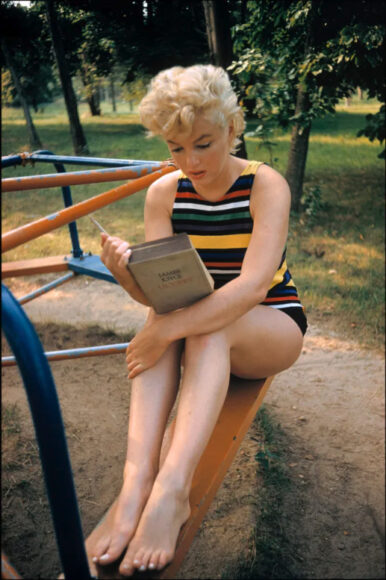
She certainly knew how she wanted to be seen. The famous contact sheets on which she would spend hours choosing the specific pictures she wanted are evidence of a mind determined to control the image. But there is something desperate too about the crossing and recrossing, the scratching on negatives with hairpins and fingernails. When your looks are your currency, the agony of preserving them is fierce and savage.
And in the biographies of the photographers included in the show, it’s hugely noticeable how many of them underwent identity transformations that rhymed with hers. Halsman was a Latvian Jew who studied in Paris. Alfred Eisenstaedt was born in West Prussia and grew up in Berlin. Bruno Bernard fled the Nazis in Germany and was originally Bruno Sommerfeld. Bruce Davidson was born in Illinois to a Jewish family of Polish heritage.
Her photographers were also name changers and loose atoms set adrift in a world short of certainties. Halsman watched her turn from Norma Jeane into Marilyn Monroe. Tom Kelley posed her naked as Miss January in 1949 and ensured that the unforgettable face had an unforgettable body attached to it. Sam Shaw found a gentle poetry in her. Eve Arnold seemed to look inside her. For Eisenstaedt she smouldered irresistibly, Marilyn Monroe as the epitome of Marilyn Monroe.
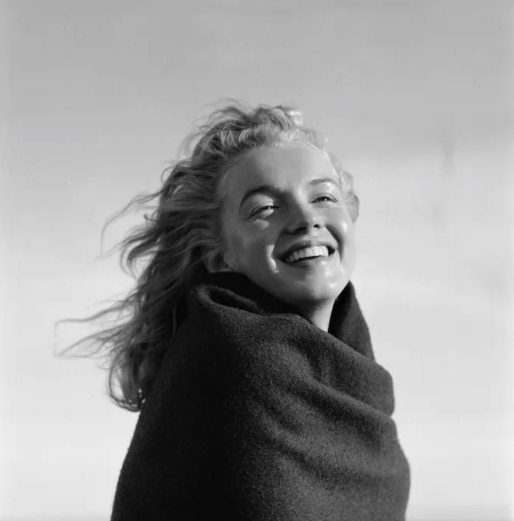
The section devoted to Andre de Dienes felt especially poignant. Born Andor Gyorgy Ikafalvi-Dienes in Hungary, he fell deeply in love with Norma Jeane in 1945. They went on a road trip together to Death Valley, where he photographed her looking so fresh-faced and happy. The trademark innocence is already there, with none of the peroxide clarity that came later. Dienes was a short-lived fling. But he couldn’t let go of her — and was still making art with his original negatives 20 years after her death in 1962.
It’s something foregrounded in the second half of the show by the artists who painted and portrayed her after her passing. Andy Warhol, Pauline Boty, Marlene Dumas and Peter Blake weren’t just portraying her, they were erecting shrines to her memory.
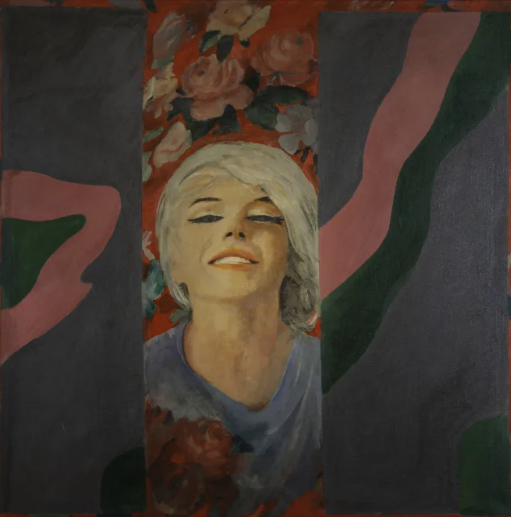
Goodbye Norma Jeane. We never knew you at all. We just thought we did and wished we did.
Marilyn Monroe: A Portrait is at the National Portrait Gallery, London, to Sep 6