Michaelina Wautier is not a name that trips off the tongue. It never has done. When she was alive (1604-89) her friends and family called her Michelle. Only in her art would she sign herself in a scratchy and effortful script the full “Michaelina Wautier”, sometimes adding, with evident pride, “painted and invented this”. In Latin.
There was a lot to be proud about. With some of the “lost female painters” whose rediscovery has enriched recent art history there remains an awkward suspicion that their gender has had to do much of the heavy lifting. Rediscovering them is always fruitful. But only the fact that they were women lifts them out of the crowd.
That cannot be said of Wautier. An exciting display that has arrived at the Royal Academy makes it quickly obvious that she has been a special loss. Our first sight of her is in a towering self-portrait where she sits before an easel oozing confidence, thoughtfulness and class. If this were a game of cricket, it would be like starting the innings with a six.
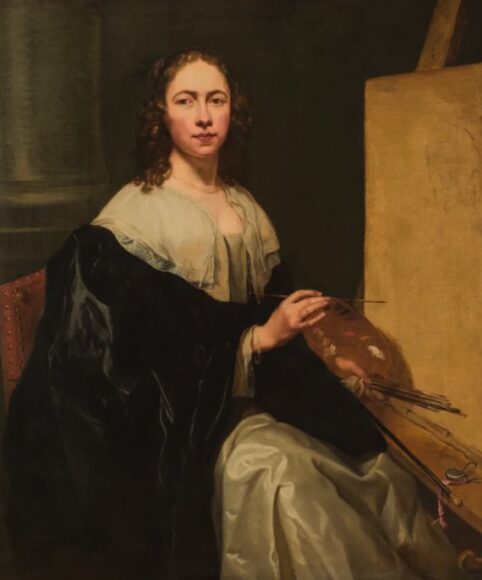
Painted at the height of her career, in about 1650, the impactful selfie shows off an immediate range of skills. The likeness is gripping, a fabulous face, younger than its years perhaps, staring past your shoulder as if she has noticed someone more interesting in the room behind. Something whispery and private is being recorded, not just an appearance, but an inner life.
So that’s already impressive. Then you start noticing the rest. The way her posh clothes, the velvet shawl, the white satin dress, are so convincingly evoked. The delicate care with which every brushstroke has been applied. And, of course, the elephant in the room, the pose itself, the fact that she’s showing herself at her easel, unmissably an artist.
The caption on the wall skips briefly past the information that it was female artists who pioneered the artistic self-portrait. Indeed, they invented it. A century earlier Catharina van Hemessen became the first painter to show herself at work before an easel. Now here is Wautier doing it too. Why?
By way of an answer, the RA has plonked a self-portrait by Rubens next to hers. It shows him dressed in courtly black, his hand resting nonchalantly on his sword. If you didn’t know it was Rubens, you would think he was a general in civvies or a city prince. Never a painter.
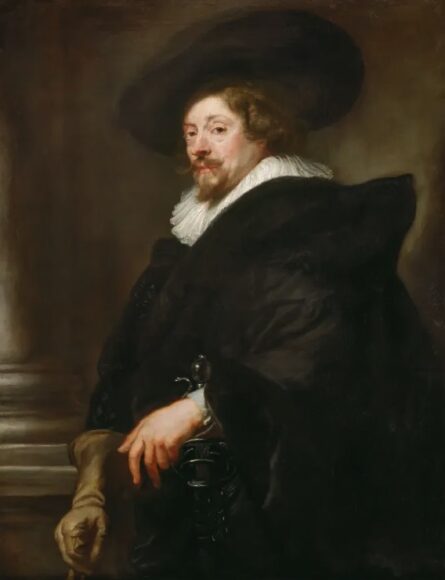
Rubens has been included to make a big and important point. While for Wautier being an artist is a cause for celebration, for Rubens it’s something to hide. For her, painting is a promotion from domesticity, for Sir Peter Paul Rubens, ambassador to the court of Charles I, it’s a step backwards. Two self-portraits, one immediate reveal of the gender imbalance.
The show ahead is packed with delights. Portraiture was one of Wautier’s things, and she was strikingly good at it. But where she really stands out is in tackling large religious scenes and surprising mythologies.
A beautiful presentation of The Education of the Virgin features St Anne teaching an utterly convincing little Mary how to read. Before she became the mother of Jesus, Mary was an ordinary girl, and Wautier has clearly searched through real life to find exactly the right sweet but characterful child to play the role.
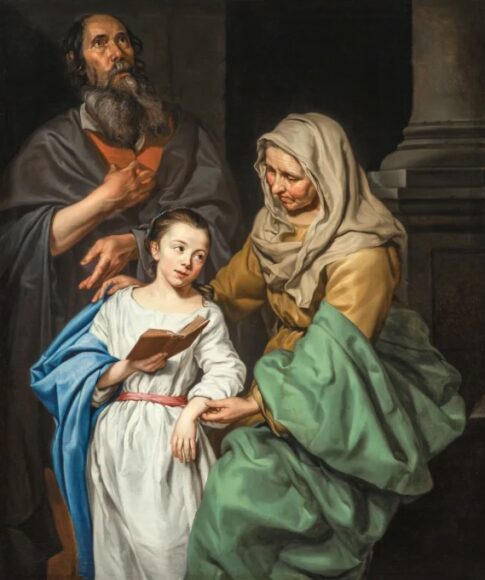
She’s a catchy colourist too. The show’s curators make a big deal of her inventiveness, the way she implies the colour blue without using it, creating blue effects with blacks and greys because genuine blue pigment was too expensive. It’s true. She conjures up blue from nothing.
But look also at the eye-catching way she handles that loud and difficult colour yellow, in the robe sported by Mary again in a warm Annunciation. I’ve been racking my brain, flicking through all the Flemish baroque painters I have seen, trying to remember another expanse of yellow as bold and striking as this. And I can’t.
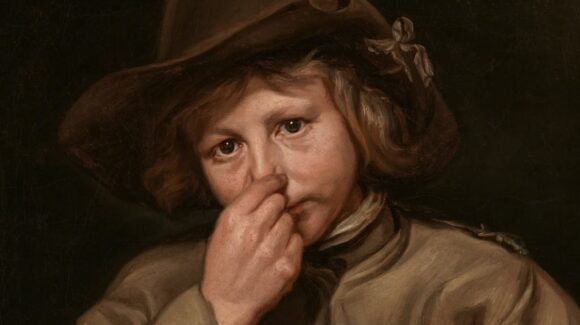
More predictably, perhaps, she’s such a trustworthy painter of children. An extraordinary sequence of five little boys, each of whom represents one of the five senses, has them touching, listening, looking, so playfully and cheekily. I particularly liked the kid holding his nose above a rotten egg, representing the sense of smell.
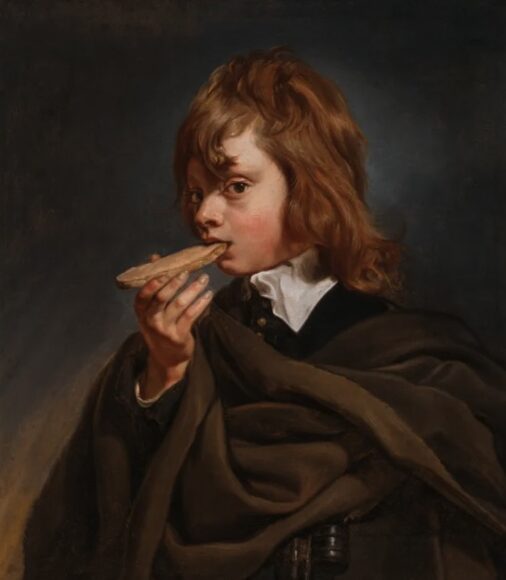
So there’s a sense of humour at work here as well, and you see it being displayed conspicuously in the exhibition’s magnum opus, a huge imagining of The Triumph of Bacchus in which the naked blokes are unusually saggy and Wautier pops up again as a topless bacchante. I’m here, she seems to be saying, but I don’t really belong.
Something else that separates her from Rubens is her careful realism. Where his brushstrokes take outrageous shortcuts and seem always to be the handiwork of a driver breaking the speed limit, hers take their time to get things exactly right.
She even produced gorgeous and different still lifes. The evidence is brief, but from the couple of examples included here you would have to conclude that not many 17th-century flower painters captured the spirit of a fading garland as truthfully as Wautier.
Interestingly, but also confusingly, she shared her workshop in Brussels with her brother, Charles Wautier, who pops up around the show in a manner that leads to doubts. The initial evidence suggests that she was a much better painter than he. Deeper into the event, it gets cloudy. Work is clearly needed to clarify their roles. And Charles probably needs a bit of rescuing too.
Michaelina Wautier is at the Royal Academy, London, to Jun 21, royalacademy.org.uk