
Have you been observing Lent? Not eating meat or drinking alcohol, praying, giving alms, refraining from sex for 40 days? Yeah, yeah, yeah. I myself have failed in most of those ambitions, although I did at least find some old coins from the time when money was money to hand out to anyone I encountered sleeping in a doorway.
Not that I am religious. I went to a Catholic boarding school and lost my faith at the age of 13. But you don’t spend your youth pickled in Christianity without some of the messaging soaking in. At Eastertime tangible sensations still swell the heart. I try to make Holy Week feel special. I fret annually about the 40 days of Lent. And I obsess about eggs.
Eggs, as you know, have a huge Easter presence. What you may not know is why you are searching the shelves at Tesco for those extra-tasty and extra-expensive Lindt mini eggs or sneaking about at night arranging secret bunny hunts for your kids. And here art can help. Because, unlike the contemporary supermarket, art has an ancient history of dealing with eggs at Easter.
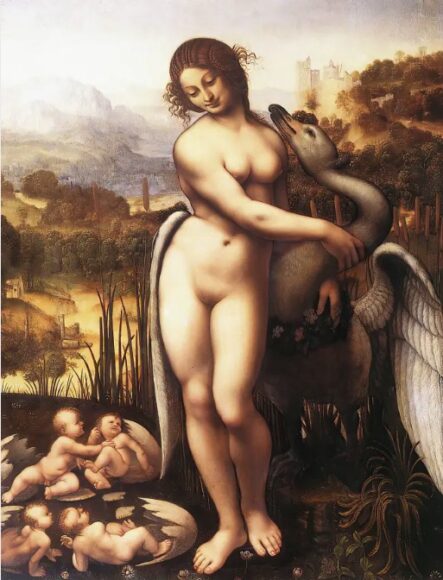
Some of the reasons are obvious. It is no coincidence, of course, that spring and Easter coincide. Underpinning all our sensations of spring is a sense of renewal and rebirth. Having switched off for the winter, nature is bursting back to life. Pigeons are cooing, nests are being built, eggs are being laid.
Whatever our beliefs, however modern our attitudes, lurking with us is a lingering understanding of the changing seasons and the hopes that go with them. Eggs are locked in our consciousness with ideas of a joyous awakening. No one, especially not the ancients, can ever have missed it.
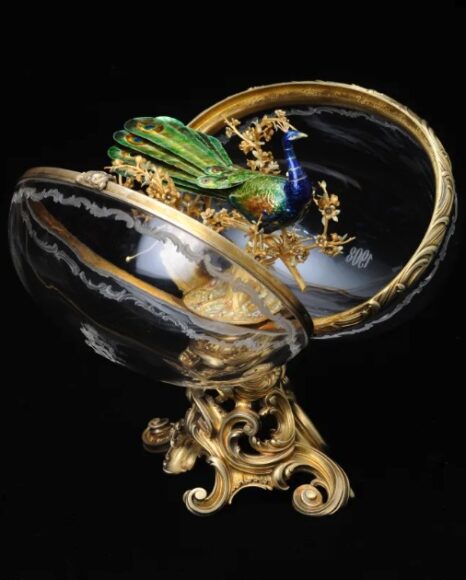
Evidence for this persistent history can be traced back a long way. In South Africa they have found decorated ostrich eggs that are at least 60,000 years old. They won’t have been the first. In ancient Egypt and the many early cultures of Mesopotamia, eggs were habitually associated with ideas of rebirth. By the time the early Christians arrived on the scene, egg worship had been baked deep into human consciousness.
Just look at them. They are remarkable things. Hiding under a protective shell, the miracle of life has been created and lies dormant, waiting for the warmth that allows it to waken. “The bird fights its way out of the egg. The egg is the world. Whoever will be born must destroy a world,” Hermann Hesse wrote gnomically in his novel Demian. It’s something Nestlé could put on the outside of its Smarties eggs!
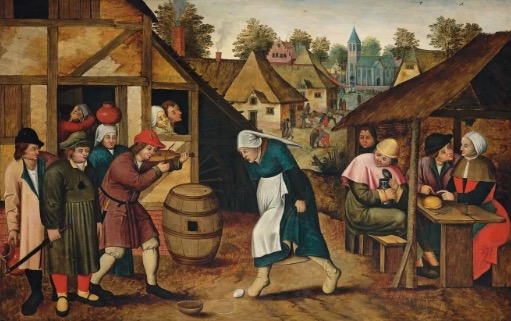
The first Christians were primed to associate eggs with ideas of spring and rebirth. The explosive New Testament story of Jesus coming back from the dead, reborn after three days in the sepulchre — the focus of the Christian Easter — may have appeared independently, but was its acceptance accelerated by existing notions of spring? It’s another chicken and egg conundrum.
What cannot be doubted is that the egg is a perfect visual metaphor for Jesus’s rebirth. The hard shell stands in easily for the stone tomb, and the life hidden inside rhymes happily with the reawakened Saviour. Small wonder the early Christians in Mesopotamia began incorporating eggs in their Easter worship almost immediately.
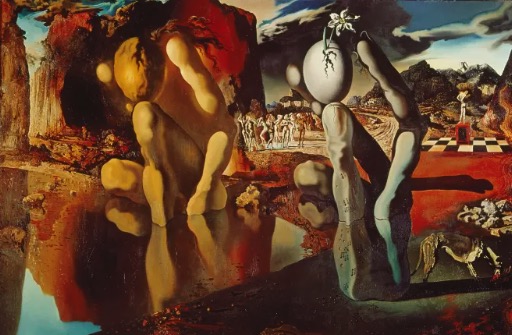
To emphasise the religious meaning of the Easter egg, they began also to colour it red as a visual reminder of Christ’s bloody death on the Cross. To this day, all sorts of cultures continue to paint their eggs at Easter. I did it when I was a kid. My mum would boil the eggs in onion skins and turn their shells to a moody maroon. When you are giving your children chocolate eggs for Easter you are reminding them of Jesus’s death on the Cross and his Resurrection three days later. The supermarkets should put that on their chocolate boxes as well.
As for the Easter Bunny and his secret eggs hunts, he’s a mere arriviste, a much later fashion dreamt up by German Lutherans in the 16th century. Because rabbits are notorious breeders, there was much religious fun to be had associating them with the search for eggs. Underlying the fun was a serious instructional ambition. If you were a good child you would find the egg. If you were a bad child you would not. The Lutherans took this harsh idea to America in the early waves of immigration and America did what it always does: turned it into a money-spinner and sent it our way.
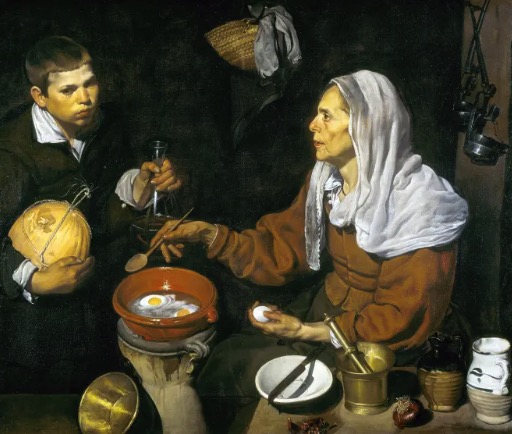
You may perhaps be wondering where Lent intersects with this ancient progress of the Easter yolk. That’s a parallel storyline. During Lent we are supposed to fast, pray, give alms and stop having sex. Nine months after Lent, therefore, the ancient Christian records for the arrival of babies jump off the scale. Jesus was not alone in appearing at Christmas. Ancient nurseries were packed.
And because the Lent fast prohibited the eating of eggs, the ones that were already laid and collected had to be used in big pre-Lentian blowouts. Hence the making of all those pancakes on Shrove Tuesday. And the riotous February carnivals of Venice, New Orleans, Rio. It was a final chance to stuff ourselves and loosen our belts before the season of abstinence set in.
Thus the egg has managed to stand in simultaneously for rebirth, abstinence, pre-abstinence, anti-abstinence and the warm sensations of spring. It’s a profoundly fertile history. Small wonder it has given art, through the ages, so much to play with.