Gustave Fayet was a man of many parts. All the parts were remarkable. But until today no one has thought to put them together.
Now the full Fayet — painter, designer, rebuilder of churches, restorer of stained glass, rug-maker, ceramicist, Buddhist, occultist and, above all, one of the greatest collectors of art to have walked the earth — is about to emerge before us.
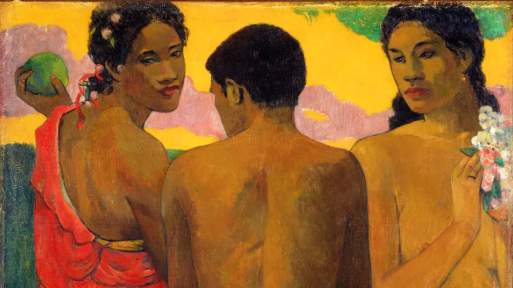
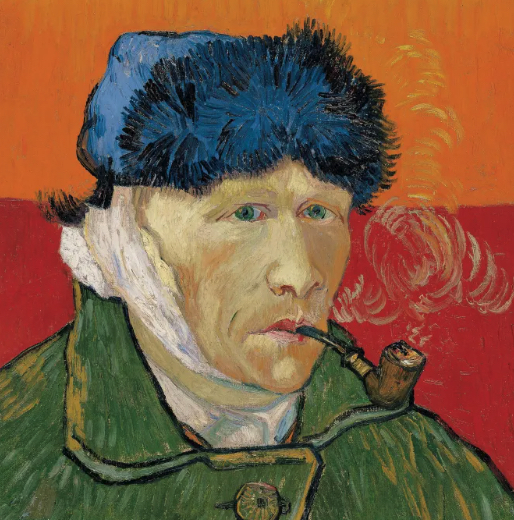
Among the treasures of the Fayet fest that is heading for the Louis Vuitton Foundation in Paris this autumn will be a room filled with 78 of the 100 or so Gauguins he owned. Also, ten of his Van Goghs, including a Self-Portrait with Bandaged Ear that hasn’t been seen in France since 1937. Degas will be there. Toulouse-Lautrec will be there. Odilon Redon will be represented by — you may need to sit down before you read this — 88 works. Tongues will loll.
Fayet (1865-1925) came to my attention properly in 2003. It was the centenary of Gauguin’s death and I was commissioned to make a documentary about his life that involved retracing the artist’s footsteps. Poor me! The filming took me from Peru to Panama, from Brazil to Brittany, from New Zealand to Tahiti. Gauguin was the most travelled artist there has been. And every time I paused to consider an important painting by him, I found it had once belonged to a man called Gustave Fayet from Béziers.
Surely not? For many years I have spent the summers in southern France, not the posh bits around St Tropez and Nice, but the scruffy Catalan stretches near Narbonne and, yes, Béziers. It’s France with a Spanish flavour, where they still have bullfights and drink their red wine cold. No place for aesthetes.
Béziers cathedral is a looming military structure made for fighting rather than praying. It doesn’t take long to visit. So after a quick transit of the transept it has been my habit to pop around the corner to the local museum. I’ve been going for years. And never given its name a serious thought.
The museum is called the Musée Fayet. It used to be Fayet’s private home. Once, its walls would have been hung with Gauguins and Cézannes, Picassos and Renoirs. Today the decor remains moneyed, but there’s a 19th-century darkness to it: a conservative gloom. The writhing sculptures that fill the floors were made by Jean-Antoine Injalbert, a local artist much celebrated in Béziers. Like that bottle of ouzo you bought on Hydra, he’s a local pleasure that doesn’t travel.
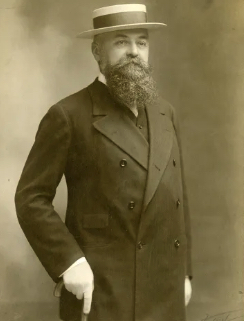
What you do not find at the Musée Fayet is a tangible sense of the man himself. Occasionally, a painting by him might be on display. But the extraordinary collector of avant-garde art, the crazy Gauguin lover, the man who gave Picasso his first show outside Paris, has been redacted from his own home. It’s a missed trick.
I used to tell a story that I now know not to be true. I read it in a fanciful biography of Gauguin and wanted very much to believe it. The story was that Fayet offered his entire art collection to Béziers, but the city turned him down. Gauguin was too modern for them.
This story is probably a misremembering of real events. Between 1900 and 1904, Fayet ran the Béziers museum and organised pioneering modern art shows there featuring Gauguin, Van Gogh, Monet, Picasso. Unfortunately, the good folk of Béziers were unimpressed by his go-ahead tastes. As were the Béziers newspapers. The criticism grew. It hurt. So Fayet quit his job and moved to Paris. Not permanently, of course. The scruffy bit of France was in his blood.
I made a pilgrimage to the Abbaye de Fontfroide, Fayet’s second local home, near Narbonne. It’s a converted Cistercian abbey that he bought in 1908. Fayet, who had made his fortune in wine, had also married into serious money, so there were plenty of francs sloshing around for him to restore the ruined abbey. And to continue amassing Gauguins.
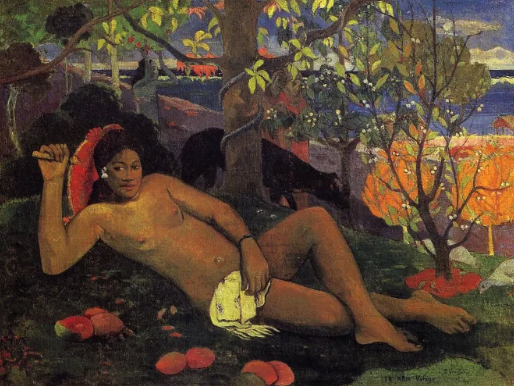
About the time Fayet began collecting him, Gauguin left Tahiti and moved to the Marquesas Islands, the final stop on his crazy seafarer’s journey. Fayet bankrolled him and started buying every Tahitian picture he could get his hands on. Te Rerioa (The Dream), which now hangs in the Courtauld Gallery in London, was his. Three Tahitians from the National Galleries of Scotland was his. Te Arii Vahine (The King’s Wife), which is in the Pushkin Museum in Moscow, was his.
All this superb art was shipped back to France and into the waiting arms of Fayet. Having gathered as many Tahitian Gauguins as he could, he turned his attention to the painter’s earlier work, the fabulous Breton pictures. He bought The Yellow Christ. He bought The Breton Calvary. He bought the lovely beach scenes from Le Pouldu.
Later, in his apartment in Paris, Fayet opened an impromptu Gauguin museum, which at one point displayed 200 works. Picasso visited. Everyone visited. This was collecting of a different order. Collecting to change the world.
I knew some of this. I did not know what Fayet achieved at his converted abbey. When I finally visited Fontfroide, the missing pieces of the jigsaw slotted excitingly into place. In the library, where he studied dark tomes about the occult and displayed statues of Buddha, he commissioned Redon to paint his finest murals. On one wall The Day. On the other The Night. You can see them only twice a month on a special tour. They provide some of the most thrilling art moments in the south of France.
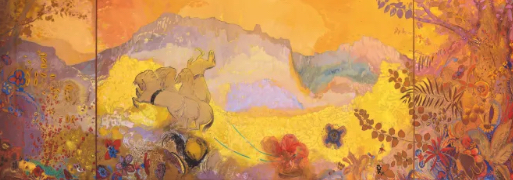
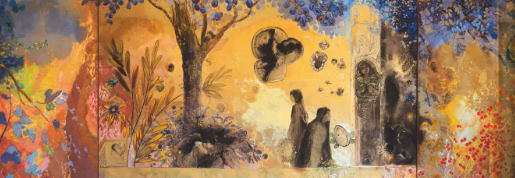
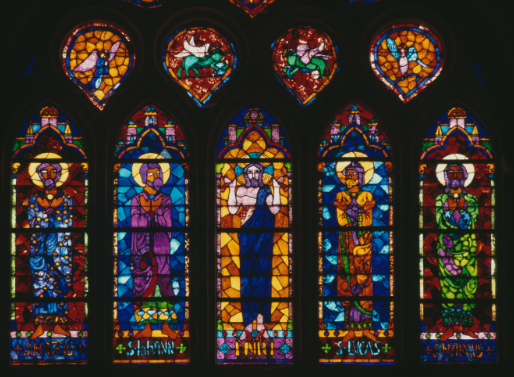
That’s just the beginning. To complete the restoration of the abbey, Fayet rebuilt the church and filled its windows with heavenly art nouveau glass designed by Richard Burgsthal. To make the glass in the correct medieval manner Fayet founded a glass factory. On the floors he laid the rugs he had designed inspired by Japanese art. The passion for Japan was another piece of the jigsaw.
All this — Fayet the collector, the painter, the designer, the restorer, the Japanophile — is going to be unveiled at the Louis Vuitton Foundation. Fayet’s achievements are going to fill the entire giant building. Will it be enough?
Gustave Fayet: Collector — Designer is at the Louis Vuitton Foundation, Paris, Oct 9-Mar 8