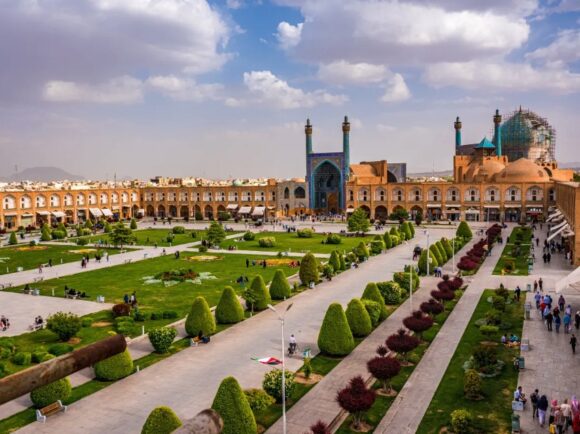
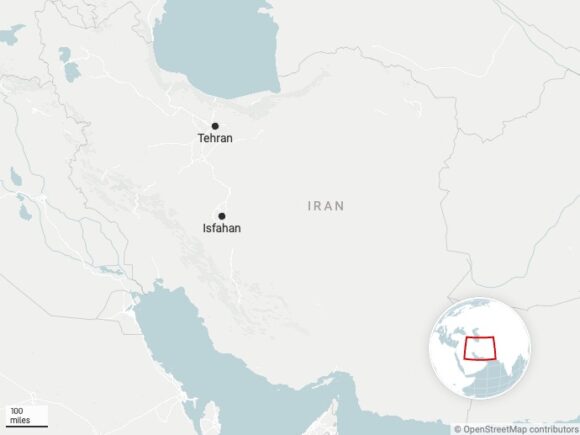
Isfahan. It’s a name that ought to be on the lips of all who love art and poetry, fountains and gardens, sensuality and architecture. Instead it’s the newsreaders who have been repeating it in grim reports from the ruins of Iran. Bombs falling. Buildings burning. Targets missed. Palaces caught in the blasts.
Neither Donald Trump nor Benjamin Netanyahu can ever have been to Isfahan. Neither of them can have sighed with excited pleasure at the magical domes, the paradisical pleasure grounds, the secret bridges, the gorgeous tilework. Had they been there, like so many ecstatic visitors over the centuries, like my mum in the Second World War, like the besotted American historian Arthur Upham Pope, who is buried in Isfahan in his own crumbling mausoleum, I do not believe they could or would have risked their arm’s length attack on targets in a city packed with cultural landmarks. Too much that is too evidently beautiful would have been at stake.
Unfortunately, one of art’s many tasks, perhaps its most regrettable, is to remind us, time after time, conflict after conflict, of the destructive stupidity of which we are capable. Poor old art, trapped in the middle, keeps having chunks of itself blown up by this bomb or that.
If you go to the Sistine Chapel and stare up at the scene of God creating Adam, recorded by Michelangelo, look carefully at the touching point of the fingers. You’ll see that it’s a slightly different colour from the surrounding fresco. That’s because it had to be repainted by an anonymous lackey after a gunpowder store in the Castel Sant’Angelo blew up in 1797 and shook slabs of Michelangelo’s masterpiece to the floor, including the bit with the fingers.
In all its locations, art is always vulnerable. What makes the conflict in Iran particularly mournful is the happy and ecstatic nature of Persian art: the optimism, delicacy and gentleness of its messages, the unimaginable care and precision that went into its creation. In not recognising this, not celebrating it as loudly as it should be celebrated, the mullahs of Tehran are as guilty as the long-distance bombers. They too have betrayed the traditions of Islam. In their case, the betrayal is from within.
Twenty years ago, when these things were still possible, I spent most of a year voyaging across the Islamic world, filming a documentary about the achievements of Islamic art. It was an unforgettable experience.
The journey took me from the turquoise domes of Kazakhstan to the Fatimid madrassas of Cairo, from the carpet factories of Cappadocia to the mud mosques of Mali. In Mali, after the rains, the villagers of Djenne would wade into muddy pools and emerge happily with armfuls of slippery clay with which to refurbish their great mosque, applying coat after coat of fresh mud with their hands.
I was watching all this in Djenne in 2005, listening to the village singing, when a telephone call came through on my mobile from England. A bomb had just gone off on the Tube at King’s Cross in London. It was the route my daughters took to school. But they were OK. The gods had spared them.
In the film I describe the moment and agonise on camera about the dilemma in which I suddenly found myself. I had just spent many months visiting some of the most exciting places I had been to and seeing some of the most beautiful art. When it comes to uplift and gorgeousness the art of Islam has few if any rivals.
And everywhere I’d been, I’d been treated courteously and warmly. The mosques had felt more like friendly youth clubs than strict religious institutions, with kids running about happily, shouting and joking. In Iran I had read verses by the Persian poet Omar Khayyam in front of the tomb of the Ayatollah Khomeini, and the surrounding children had given me a thumbs-up.
Yet here was news on the phone of something black and deadly being exported to my world. It made me realise, with the Stendhalian force that art can exert, how wrong the mullahs are in their misrepresentation of Islamic creativity: how the abandonment and repression of Islam’s artistic traditions and histories constitutes a religious rewrite. How wrong it was. Nowhere is this more evident than in Isfahan.
It was my mum who first told me about Persia and its magical moods. In 1939, when she was 14, she had been transported on a cattle truck from Poland to a labour camp in Siberia by the invading Russians. She was there for two years. When the Russians changed sides and joined the allies, they opened the labour camps and told the enslaved workers they were free. Thus commenced the great march of hundreds of thousands of Polish prisoners from Siberia to Iran, or Persia as it then was, where the British set about finding new homes for them. That’s how my mum ended up in Basingstoke.
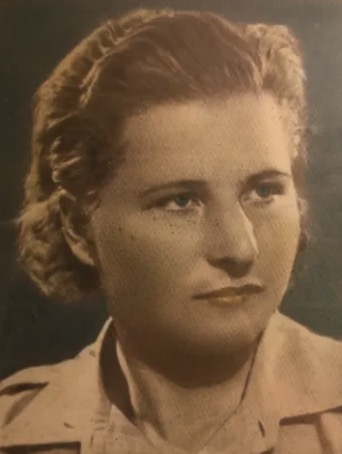
She used to love talking about Persia. How kind the people were. How you could fry an egg by cracking it on a midday rock. How the buildings and especially the mosques were like nothing she had ever imagined or dreamt about. How miraculous they were, how beautiful.
When I got to Isfahan I had already seen enough Islamic art in central Asia, north Africa and the Middle East to be unsurprised by its perfection and exquisiteness. I already knew that the variety of Islam that was repressing its art and waging war on the West was an aberration, a disfigurement. Islam’s art, its history, the achievements of its past, had recurrently proved that the understandings of the mullahs were going against the Quran in spirit and tone. I knew all this. But I still wasn’t prepared for Isfahan.
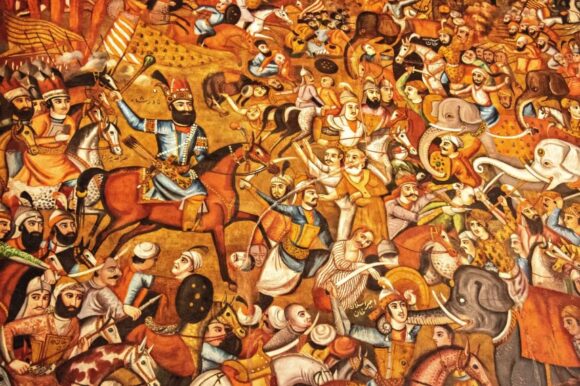
Last week I saw on CBS News that incoming missiles had inflicted collateral damage on the palace of Chehel Sotoun. From shaky film smuggled out it was clear that the fabulous pleasure pavilion, commissioned by Shah Abbas the Great, built between 1647 and 1666 — so at exactly the time when we in Britain were beheading our king and preparing to set fire to London — was left scarred. The rousing frescoes in its main hall of dramatic Islamic battles had, like Michelangelo’s Sistine ceiling, been badly shaken and chunks were missing.
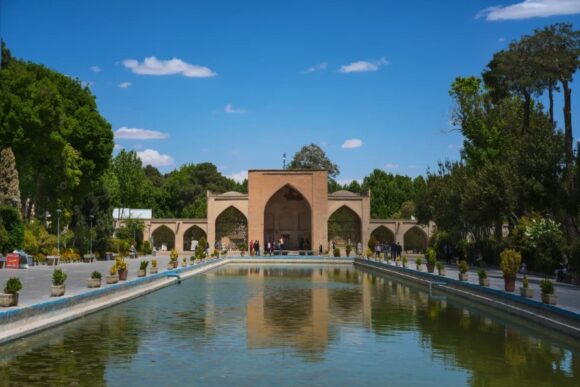
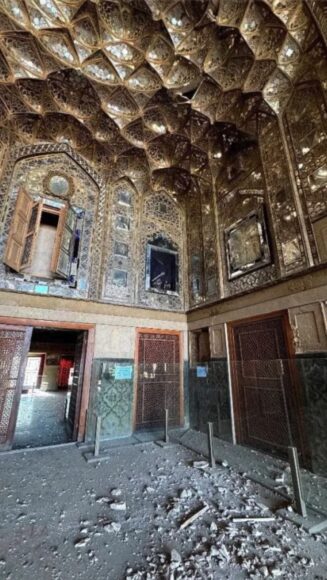
One of the chief misconceptions that westerners have about the art of Islam is that it bans the painting of figures. It doesn’t, or rather it shouldn’t do. Anyone who has looked at Persian miniatures, or Mughal painting, or the frescoes in the summer palaces of the first caliphs in Jordan, or the beautiful palm trees and rivers mosaiced inside the Dome of the Rock in Jerusalem, anyone who has read the historic account of the Prophet Muhammad preserving an icon of the Virgin and Jesus in the Kabba in Mecca, will know that Islam’s history of image-making is long, delightful and nuanced.
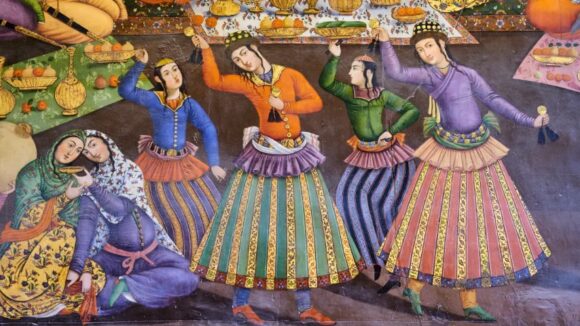
It’s evident across the Islamic world, but particularly evident in Iran, and especially in the palace of Chehel Sotoun. One of the rooms off the main hall contains frescoes from the era of Shah Abbas showing orchestras playing, wine being drunk and topless dancing girls swaying dreamily to beautiful music. I admit, I wasn’t expecting it.
The guide showing me round pointed out the scars in the dancing frescoes inflicted by angry fanatics. He described how the workers at the palace had formed a human shield to defend the palace and its art from further damage.
On that occasion it had worked. This time it hasn’t.