In the Chinese zodiac, it’s the year of the horse. And not just any horse. In a rare cosmological concurrence, it’s specifically the year of the fire horse, when all the usual horsey pluses — strength, speed, independence — are united with the best fiery powers — passion, volatility, change. Those of us fortunate enough to have been born under the sign of the celestial Shergar find ourselves in a year full of promise. As does the National Gallery.
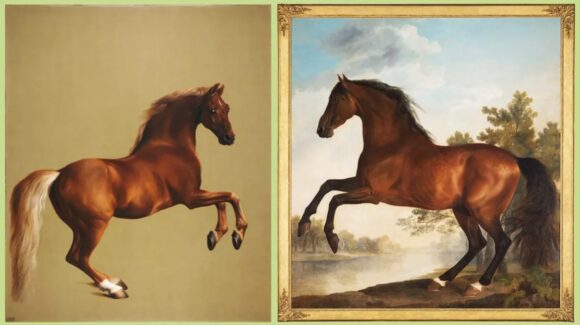
The portrayal of the rearing racehorse Whistlejacket, by George Stubbs, is among the National’s most beloved holdings. Near as dammit lifesize, it depicts the mighty steed in a fabulous Lone Ranger pose that thrills every visitor. Unusually, he’s portrayed rearing up before an empty background, and this absence of a landscape setting gives him a sculptural air, as if he’s on a plinth, snorting down on us.
Onlookers regularly rank him among the National’s most popular paintings. As a piece of revolutionary horse art, he’s unique. And appears too modern for his date of 1762. In the year of the fire horse, no exhibit in any of Britain’s museums feels as celestially destined to win the cosmic Derby as Whistlejacket.
Except that he now has a pal. A rival even. In a brilliant loan, the gallery has managed to get its hands on another rearing stallion by Stubbs, called Scrub, who is also near as dammit lifesize, and who finds himself at the centre of a tasty display — Stubbs: Portrait of a Horse — on the other side of the gallery.
Scrub and Whistlejacket share a story. Both were commissioned by the Marquess of Rockingham and both were originally supposed to have George III on their backs. It’s a complex plotline. Rockingham, a prominent Whig, was seeking to curry favour with the new king. So he commissioned a portrayal of His Mad Majesty astride Whistlejacket. But politics being politics, the marquess fell out with the monarch, and George was redacted, leaving Whistlejacket riderless.
But wait. In circumstances that remain annoyingly unclear, at about the same time, Rockingham commissioned a second portrayal of Mad George on a rearing horse, with the unfortunate nag this time being the bay stallion Scrub. Once again, the king ended up redacted. Once again, the result was a magnificent piece of equine worship. This time, however, there is a landscape behind, a misty English morning with a river flowing through it.
Why the two great riderless nags? Why does Scrub have a background, while Whistlejacket does not? Only the gods of the fire horse know for sure. What is obvious is that Scrub is another horsey masterpiece. Indeed, I reckon he’s a better piece of horse painting than Whistlejacket. Which is a turn-up.
Whistlejacket is a palomino, a beige horse with a white mane and tail. That’s a winning combination if you’re a toy in the My Little Pony range, but for a champion racehorse or, indeed, a mighty symbolic steed, it’s an unserious look.
Scrub, however, is a bay stallion, deep chestnut and dark, edging towards blackness. As a presence, racehorsey or symbolic, he’s more powerful and convincing. Where Whistlejacket flares his nostrils showily, and appears highly strung, Scrub has a kingly demeanour, calm and centred. If you’re riding into battle and need a horse to carry you, my choice in the stable would always be Scrub.
He’s also more accurately painted. His dark chestnut sides heave more solidly with muscle and veins. Where Whistlejacket has a vague beige flank waiting, perhaps, for a king’s leg to obscure it, Scrub’s body is taut and shiny. You sense the heat and hear the snorts. And all the time, the loosely touched-in landscape adds a note of wildness and strikes a ring of truth. Just look at the size of him. Wow.
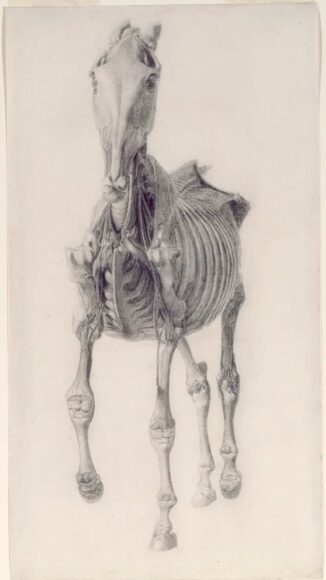
Surrounding the superb stallion is a small display of Stubbs’s spectacularly accurate drawings for his revolutionary tome on the anatomy of a horse. There are also a couple of smaller paintings of notable nags that show off his pleasing ability to endow them with personalities. It’s something to notice as well as you stomp backwards and forwards between the neurotic Whistlejacket and majestic Scrub, deciding which is the better ride in the year of the fire horse.
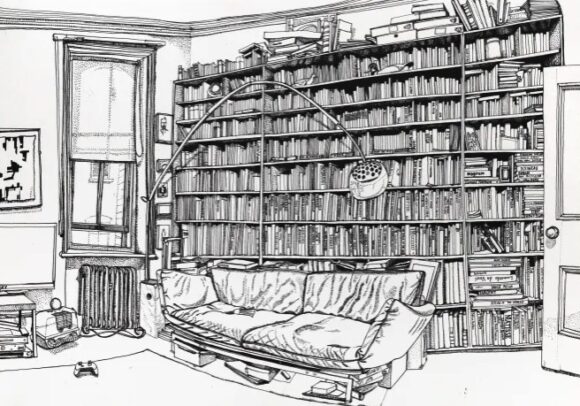
Reality as something charged and exciting is what Ishbel Myerscough also keeps noticing in a fine showing at the Lyndsey Ingram gallery. Entitled, cheekily, Stay at Home, Save Lives, it features paintings and drawings made during the Covid lockdown when she and her family were cooped up at home with only themselves and their situation for subjects. The result is a mix of interiors, still lifes and figure studies that sizzle with claustrophobic edginess.
Myerscough can be thumbnailed as a female Lucian Freud. She favours domestic moods with painterly unease running through them. Like Freud, she looks her way to drama. Stretching out her son on the kitchen table in his underpants, she paints him in a strict and shallow profile immediately reminiscent of Holbein’s great dead Christ in Basel. On a smaller scale, she does the same to her daughter.
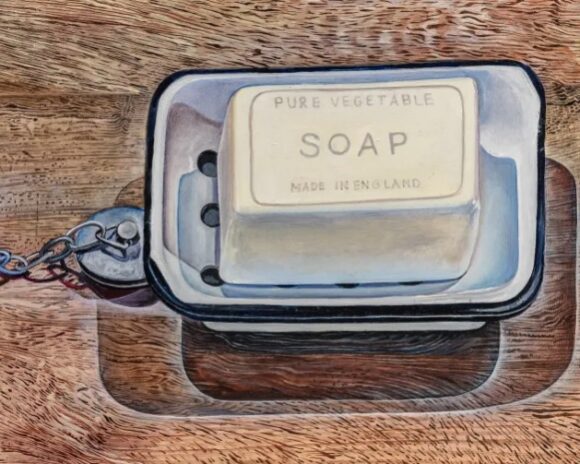
But this trademark sense of the ordinary raised to the extraordinary works most unexpectedly in a set of anxious still lifes: a bar of soap, a hairbrush, some packets of paracetamol. They are the stuff of every day, but in this show, by this artist, they are raised to the status of prickly relics.
Stubbs: Portrait of a Horse is at the National Gallery, London, to May 31; Stay at Home, Save Lives is at Lyndsey Ingram, London, to Apr 10