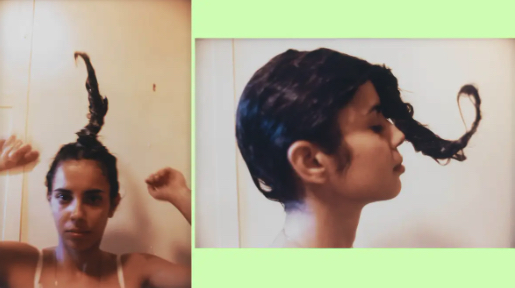
Ana Mendieta has two kinds of fame. One is as a pioneering feminist artist of the 1970s whose poetic body art predicted many paths. The other is as the wife of the minimalist sculptor Carl Andre, the creator of the infamous Tate “bricks”, who may or may not have pushed her from a 34th-floor balcony in New York in 1985. She was 36. It could have been an accident. The wide-scale suspicion is that it was not.
Andre was acquitted by a judge, but the sculptor’s death in 2024 robbed us of certainty in the matter. It also turbo-boosted interest in Mendieta and made her work seem especially loaded and valuable. It is in that guise that she arrives at Tate Modern in a show that is determined to focus solely on her and studiously avoids any mention of Andre. It’s the right ambition, of course, but it does mean you spend some of the journey wondering when the elephant is going to charge into the room.
Mendieta was born in Cuba in 1948 to a rich and prominent Havana family who sent her to America in 1961 to escape Fidel Castro. The exile uprooted her and left her uncertain of her place in the cosmos. As this engrossing retrospective makes repeatedly clear, she spent her short and brilliant artistic life searching for a place to anchor herself.
“I am overwhelmed by the feeling of being cast out from the womb,” she fretted. “My art is the way I re-establish the bonds that unite me to the universe.” And looking for somewhere to bury herself is no mere metaphor. Much of what she achieved as a pioneering land and body artist actually involved digging holes in the ground and lying in them.
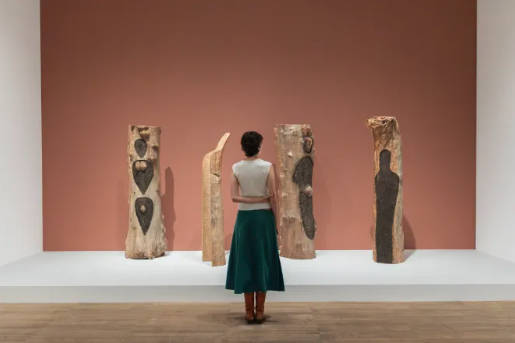
In a lively twist, the show starts at the end, with a body of work she produced in 1981, having finally managed to return to Cuba after nearly 20 years of exile. Taking a chisel to the rough stones of a Cuban canyon, she began cutting out the shape of a female figure, a violin-shaped goddess, whose crude outlines look as if they were decided on in prehistory.
Mendieta calls her the First Woman. She’s scratched on to rocks and scraped into caves. The vertical slit in her lower half stands inescapably for a vulva. And the black-and-white photographs in which these rupestres, as Mendieta termed them, are recorded add strongly to the sense of an ancient archaeology being discovered.
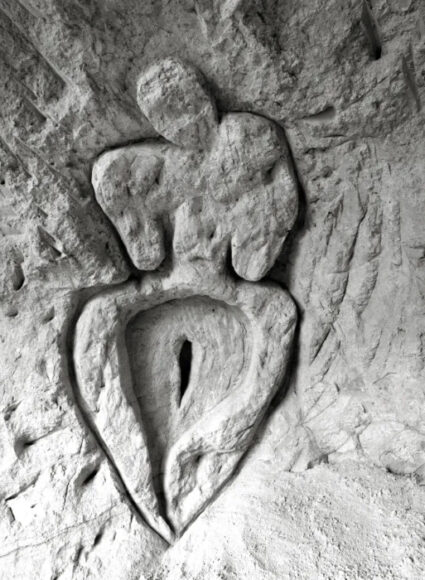
In the show’s first film the crudely outlined goddess is recreated in the sands of a splashy beach and we watch the waves wash her away. In the middle of the room she’s abstracted further and turned into a lifesize sand sculpture.
If you came across any of these makeshift goddesses by accident you would assume they were tribal: a plea to the gods for fertility produced many millennia ago. But no, Mendieta chiselled them, and in the show ahead it becomes quickly clear that the First Woman is the artist herself, looking for somewhere to belong.
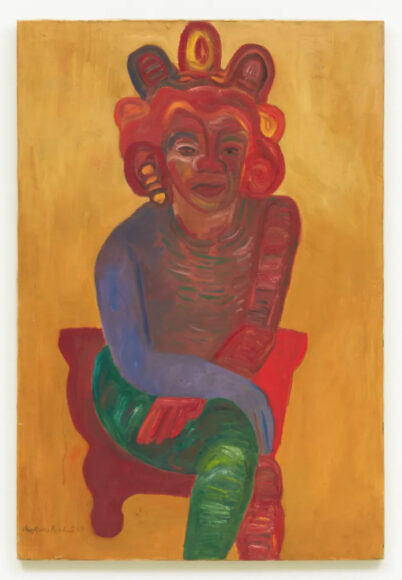
Having started at the end, the exhibition route works its way back through her story with nicely chosen thematic clusters. One niche is devoted to her earliest paintings, and although she is dismissive of them, complaining she could not convey the “power and magic” she was looking for in paintings, they have something about them, especially a self-portrait where she shows herself in multicolours wearing a flamboyant pre-Columbian headdress. It could be Aztec, it could be Incan, it could be Mayan. All that really matters is that it looks ancestral and you can’t buy it at Walmart.
Having been exiled to Iowa, she was never in a position to absorb a full range of art history. There’s no sense here of visits to museums or the reading of Gombrich. The advent of performance art and body art in the 1960s released her from the need for that kind of art education and opened the door to new creative freedoms. We’re watching invention, not quotation. Which is why so much of this event feels so fresh and exciting.
Her best-known works, her Silhouettes, show her inserting herself into the landscape in photogenic ways. Covering herself with mud, she stands naked by a tree so you barely see her. Lying nude in an ancient tomb, she covers herself with flowers and disappears into them. Scraping her outline in the earth, she fills the scrapes with gunpowder and sets fire to it.
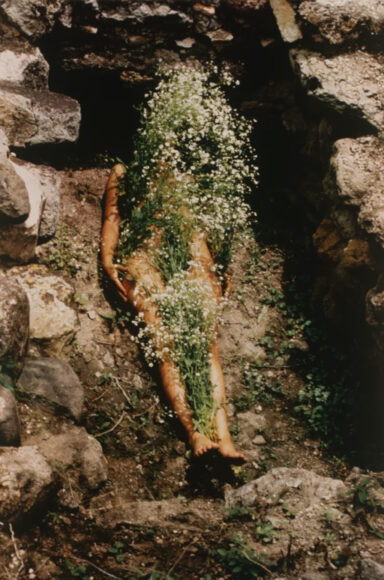
It’s the landscape version of graffiti art, an insistent mark-making that declares: “I’m here.” But it’s done with tangible gentleness and poetic invention. And it certainly helps that she has film star looks and that imagining her as a goddess is never a stretch.
Apart from filling in her story so fully, the show’s other big pluses are the films it features. Mendieta made scores of tiny films. They play here at intervals and recurrently prove how perfectly and instinctively she understood the dynamics of the haiku performance film.
In one, all you see is her head as blood drips on it from above and eventually runs down her face. In another she rolls round in cow’s blood, then covers herself with chicken feathers and makes like a bird.
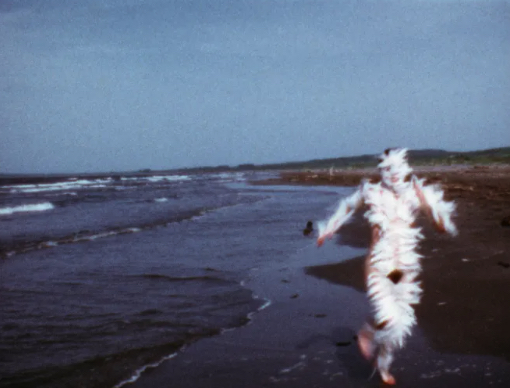
As art, it’s mysterious, shamanic, enthralling. She has a poet’s grasp of brevity and a dancer’s talent for movement. And then there’s her x-factor, an instinctive awareness of her own attraction, the film star’s sense of self. You see it in assorted examples of role playing and particularly in the confident casting and recasting of herself as the ancient goddess.
The Mendieta show is the final part of a divine trilogy of women’s events at Tate Modern. We have Tracey Emin, we have Frida Kahlo and now we have this. It’s a spectacular return to form. Congratulations, Tate Modern.
Ana Mendieta is at Tate Modern, London, to Jan 17