Japan is so photogenic it’s no surprise everyone wants to photograph it. I shudder to think how many snaps there are out there of Mount Fuji hovering on the horizon or that stripy Ginza crossing where everyone rushes over at once or the few remaining geishas in Kyoto. That Japan, the foreigner’s Japan, may even rival Venice in the number of pictures taken of it.
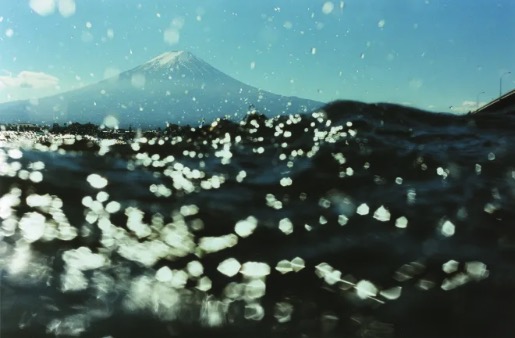
So the first thing to enjoy about Japanese Women Photographers: From 1950s to Now, at the Photographer’s Gallery, is that it contains none of that. No Ginza crossings, no geishas and just one lonely Mount Fuji barely visible at the top of a frothing ocean in which Asako Narahashi is floating, “half awake, half asleep”.
I’m glad she made it back to shore because the photo she took from the water is so spangly and dreamy. Narahashi describes it as “déjà vu-like” because it reminded her of the times she went swimming with her parents when she was a child. To my eyes, that prompts the question: what kind of parents expose their child to that?
But this isn’t any old insider’s view of Japan. This is specifically a show about and from Japanese women, which takes us quickly to some twisty national complications. Not to beat about the bonzai, Japan remains a supremely macho society. In the mind of the typical Nippon male, women are there to please and be subservient, not to take photographs of the nation’s underbelly.
In the 1950s the very act of being a female photographer amounted to a rebellion. Underlying the grainy black-and-white imagery that starts this event is the noisy sizzle of independence and courage.
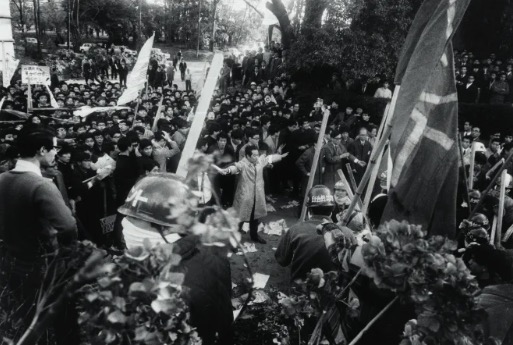
Thus Hitomi Watanabe drops us in the middle of a violent student revolt that broke out in Tokyo University in 1968. The protests she records, the fighting, the screaming, the mess, crack open our usual image of Japan like a hammer striking an egg. How can somewhere so pretty be so angry?
The 27 female photographers gathered here are far too varied to arrive at a consensus in style or meaning. But the way their collective viewpoint stands apart from the one favoured by the typical visitor hits home. Japan seen through the eyes of its rebellious women is grittily different from the cherry blossom dreams.
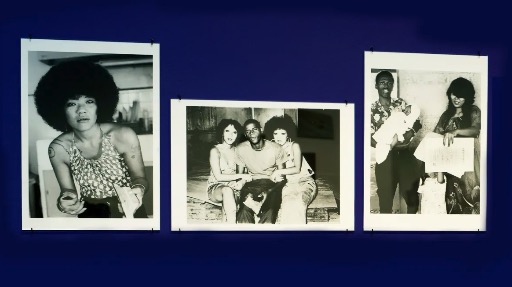
You see it in upsetting detail in the pictures Mao Ishikawa took of black American GIs preying on Japanese entertainment girls in Okinawa in the 1970s: the drunken sex parties, the masculine cruelty. In the show’s opening stretches, America’s postwar presence in Japan, a foreign occupation masquerading as a display of neighbourliness, mixes recurringly with memories of Hiroshima.
What does remain pleasing is the “handmade” quality of this early imagery. Having rebelled to become photographers, the Japanese women rebel some more to become masters of the dark room. There’s so much extra pleasure to be had from a photograph when a hand as caring as Watanabe’s or Miyako Ishiuchi’s is involved in its printing. The show didn’t set out to underline how much creative subtlety was lost with the advent of the digital Nikon, but the proof is hard to miss.
Everything I’ve been describing unfolds across the top floor of the Photographers’ Gallery. However, the show continues for a couple more levels and as we descend through the generations and approach our own times there’s a noticeable drop in independence. Japanese women’s photography becomes increasingly like everyone else’s photography.
The first big change is the advent of colour and the disappearance of the black-and-white graininess that makes everything look poetic and serious. Hiromix, the star female photographer of the 1990s, looks as if she learnt her aesthetics in a teen magazine and her history in a department store.
Her chief subject is — you’ve guessed it — herself. Partying. Dressing up. Hanging out with boys. In one of her magazine spreads she models for a set of jazzy fashions that you can cut out and attach to a Hiromix doll in bra and pants. And yes, that is a gun she’s holding, James Bond-style.
We are now in the era of the point-and-shoot camera, a new Nikon reality in which most of the effort has been taken out of taking pictures, leaving the clickers free to stare at themselves. The resulting taste for Japanese selfies, dressed and undressed, has been dismissed as “girly photography”, and there’s no getting away from the fact that we’re witnessing a collapse in gravitas.
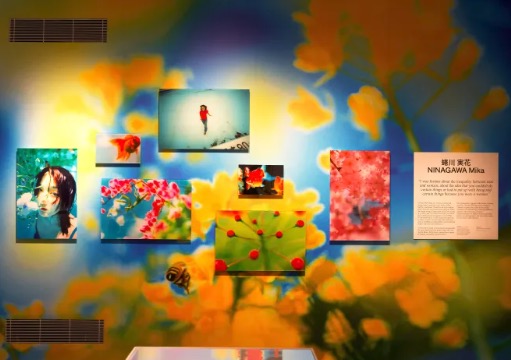
Mika Ninagawa’s pictures feature fuzzy blow-ups of flowers and faces that look as if they have been cut out from travel posters on the Tokyo Metro. Real life plays little part in the creation of these chemical-coloured teen dreams.
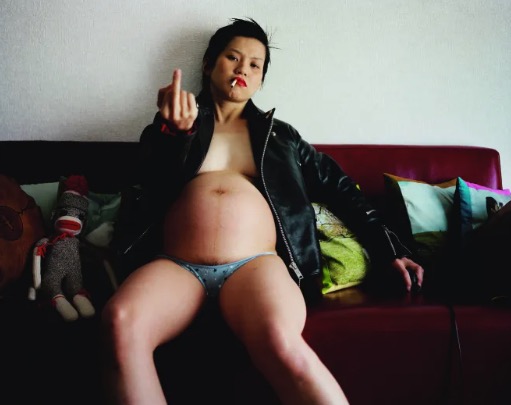
But even in the vacant era of the point-and-shoot selfie some of Japan’s uncrushable crankiness continues to shine. Yurie Nagashima poses nude for us — no surprise there. But then she persuades the rest of her family — mum, dad, brother — to join her. So there they all sit in the kitchen, divinely naked, surrounded by their scruffy domestic reality.
Among other cranky highlights are the multiple selfies taken by Tomoko Sawada who gives us what I assumed to be her old school photo: neat rows of uniformed students and their teachers. Peer closer, however, and you see that everyone is actually Tomoko Sawada in disguise.
She’s commenting on the uniformity demanded by Japan’s hierarchical social systems. It’s the same uniformity that every contributor to this stirring event is brazenly challenging.
Japanese Women Photographers: From 1950s to Now is at the Photographers’ Gallery, London, until Sep 27