Dear Jessica,
We don’t know each other, but every leader needs helpful advice when they take on a big new job and as you have been announced as the next director of the Tate I am delighted to offer some. For free! Also, the latest Turner prize has just been unveiled, so that needs opining about. We’ll come to that.
First, congratulations! It took courage to step up to this particular plate. Jobs in the arts don’t come much tougher than running the Tate. At least you have a few months to prepare before they throw you on to the barbecue on January 1.
My sources tell me that in New York you were earning $800,000 a year to run the Dia Art Foundation. Blimey O’Riley! In Europe, you could run several countries for that. Before you set sail for poverty in Britain and the gigantic pay cut that awaits you — word is it’s about 70 per cent — at least you have time to save more of those huge piles of American lolly.
Of course, getting out of Trump’s America is a plus. Who knows what destructive plans the orange monster has for the arts in the US? Perhaps he’ll sell the Dia to the Russians. Your main problem here is that the Tate’s expansion into a national empire, with two branches in London, one in Liverpool and another in St Ives, Cornwall, has made it unmanageable. All the franchises need tons of money pressed continuously into the meter just to keep the lights on. Small wonder the staff went on strike last year demanding better pay.
Apparently, you are a whizz at fundraising. It is one of the reasons you were appointed. So that will be useful. But what you really need to get right are your main money-makers and audience-pullers — the exhibitions. It is here that the entire Tate empire, but especially Tate Modern, has often forgotten its showbiz duties.
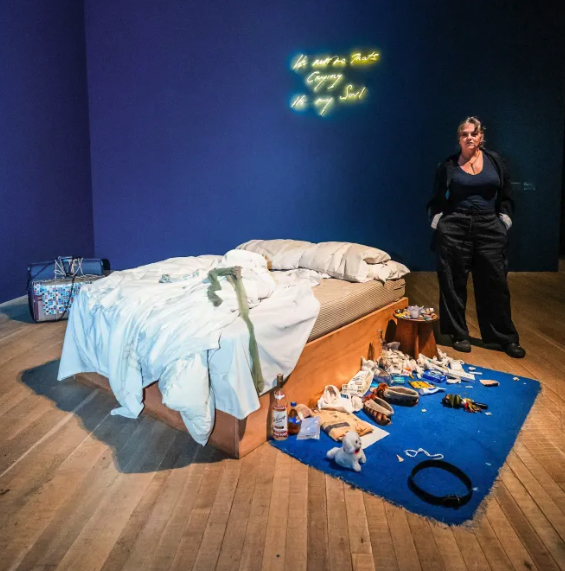
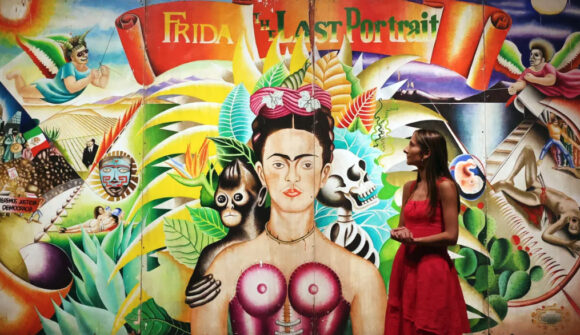
Your predecessor realised too late. Her final shows — Tracey Emin, Frida Kahlo, Yoko Ono — have been huge successes. But they were preceded by dreary stretches. Too often the Tate audience was made to feel bad and blamed for the sins of the past. It was a real turn-off. Nobody goes to an art gallery to be lectured. They go to be excited, thrilled, to have their emotions stirred, their pulses quickened, their curiosity tickled.
But you know that. I remember from your previous spell as a Tate curator that fabulous set of slides by Carsten Höller that you unleashed on the Turbine Hall in 2006. What fun we had whooping and yelling and speeding as you reminded us of the simple joys of childhood.
That happy mood has disappeared from large chunks of Tate Modern. Look how defeated the Turbine Hall commissions have become. See too what overexpansion has achieved in the twilit underground tanks on the ground floor. You can wander round them for months without seeing another human being.
Instead of keeping these Fred West basements empty, why not fill them with things people want to see? Take out all the stuff that has been banished to the stores, such as those hundreds of Picassos that appeared, as if by magic, in the recent show about Picasso and the theatre. Who knew they were there?
I promised you some thoughts on the latest Turner prize. Because you are in New York until January you may not have a chance to see it. So here’s a helpful guide to bring you up to speed.
Since the Turner was turned into a touring show that chugs around Britain every two years its impact has been blunted. It no longer inspires the ire and focus it used to trigger when it was Tate Britain’s main event. Artists in particular have bemoaned the change. Imagine winning an Oscar, then being sent to Cedar Rapids, Iowa, to collect it, rather than Hollywood.
The travelling Turner has decent ambitions to spread the word about contemporary art and I am pleased to say that this year’s effort has ended up in Middlesbrough. Jessica, you may not know this but in recent months Middlesbrough has come in for a fearsome booting, with scary tales of joy riding, police deaths, gang warfare. A casual reading of the papers may have you fearing for your life when you get here.
But I went. And I loved it. It was a sunny day. The town was welcoming. All four artists make solid showings. And there is a genuine sense of the display putting its finger on Britain’s artistic pulse. All Turner prize shows should do that. Most don’t.
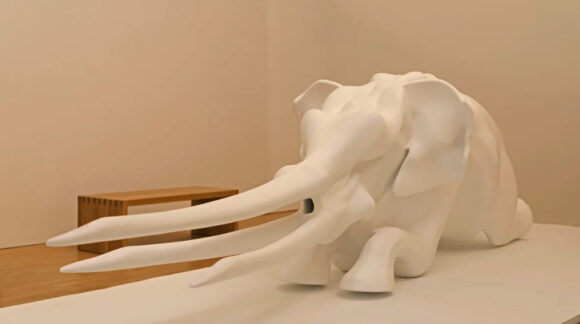
The first work we see, by Marguerite Humeau, blurs sci-fi moods with spooky depictions of nature to give us an installation that feels as if it is memorialising the passing of a world — our world. The radiation has done its worst. Plants have grown too big. Animals are dying, notably a sighing elephant in the opening room. It is a poetic lament, beautiful and melancholy. “Vote Green,” it seems to whisper.
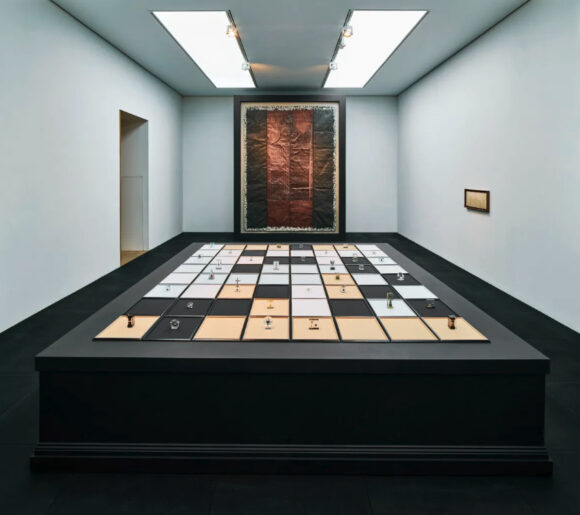
Tanoa Sasraku’s gallery feels immediately emptier. There is a giant table in the middle with things on it. Some minimalist assemblages on the walls. A door-sized black picture at the head. But the more you find out about the quiet things you are examining, the better it gets. The weird paperweights dotting the table were given to oil workers when they broke ground. Indeed, the whole installation is a rich mix of oil company bashing and personal history, conveyed with deceptive minimalism. It’s really good.
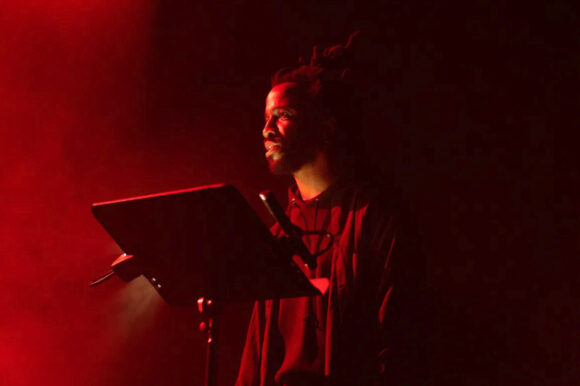
Simeon Barclay is a rap-paced poet seeking to enlarge himself into a multidisciplinary artist. As his mood-setter, he has built a scruffy industrial space out of wonky scaffolding and eerie red lights. But the piece is really about the torrent of words emanating from a noisy video at the centre. So far, so unpromising.
Barclay, however, turns out to be good at noisy words. His description of the brutal driving of the M62 through the Pennines, linking Manchester to Hull, is loaded with much darker freight than the stuff being transported though the drizzle by the “tin cans” crawling up and down the motorway. It needs a bit of editing, but it is atmospheric and searing in bursts.
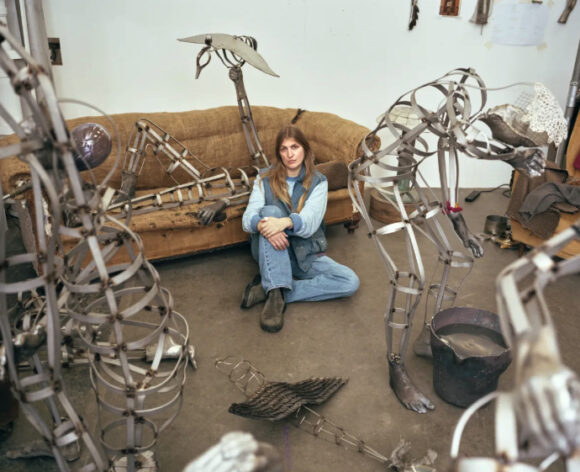
In the biggest space, upstairs, Kira Freije fills the room with mannequins and Mad Max animals fashioned brusquely from welded steel and what appear to be the contents of her local skip. Each group of figures has its own pose and mood, like one of those creepy 19th-century medical books illustrating the full range of human expressions and gestures.
I suppose the ambition here is to plunge us into the crowd and surround us with humanity’s varied states. I couldn’t get the smell of the skip out of my nostrils. I didn’t like it, but some will. Probably the judges, who seem always to pick the Turner prizewinner I admire the least.
Jessica, will you be handing out the award on December 10? You’ll enjoy Middlesbrough.
The Turner Prize 2026 is at Middlesbrough Institute of Modern Art to Mar 29