Art is always personal. Someone else’s imagination is whispering to your imagination in a visual Esperanto. But Sue Webster’s artistic disrobing at Firstsite in Colchester is more than autobiography. It’s an exorcism; a life flashing by; an existence reset. The results are so moving, they filled my eyes with tears.
Generationally Webster is a YBA: born in 1967, big in the 1990s, punkish and provocative by instinct. If you haven’t heard of her, it’s because her fame in the YBA’s heyday was shared with her partner, Tim Noble. As a duo, Noble and Webster were a noisy and popular presence on the Britpop train.
Their signature “shadow sculptures” transformed heaps of rubbish into self-portraits by shining powerful lights on to them to reveal coo-inducing silhouettes. Rubbish was being turned into love. It was magical, inventive, fun. And it all fell apart in the 2010s when they split as a partnership, split as a couple, and disappeared as a distinct presence on the British art front.
Since then Webster, on the evidence of this searing fess-up, has struggled with her confidence, her identity, her sanity. The show throws open the doors to her inner self with a candour that makes the disclosures of Tracey Emin feel like the avowals of a Trappist nun. Does Webster really want us to know all this?
But then, hallelujah. As the event enters its final stretch, she finds peace, and even joy. It’s like Jonah stepping out of the whale after days of darkness. Only those with hearts of oak would fail to cheer at the beautiful emergence.
The journey is divided into three acts. The first, called The Crime Scene, presents a detailed e-fit of her younger self with a busy selection of archive tacked on to the wall in deliberate approximation of her teenage bedroom. An inveterate hoarder, she appears to have saved every ticket stub, every meaningful letter, every telling memento of her earlier life, and turns all this edgy evidence into a sprawling mood map on which she traces endless connections with a red thread that you are encouraged to follow.
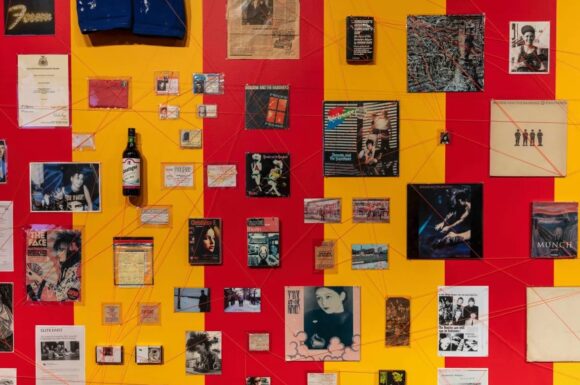
Good luck with that. There is so much to notice, so much to recognise, no one apart from Webster can possibly grasp it all. But general impressions do emerge. If you love riffling through the dustbins of strangers, you’ll love The Crime Scene.
As a schoolgirl she looked wrong and was bullied. As a teenager she found succour, as well as excitement, in the musical presence of Siouxsie and the Banshees. She dressed like Siouxsie. Rebelled like Siouxsie. But when love came and went, she fell apart in a manner closer to the emotional descents recorded by her dad’s musical favourite, Leonard Cohen.
The Siouxsie obsession turns into something weirder and more complex in the show’s second act. Having flashed her life before us, taken us as far as her break-up and got to the age of 50, Webster begins suddenly to make art using black biker jackets.
At an age when many are dreaming already of their pensions, she starts to relive her Siouxsie years, manically decorating 18 leather jackets with Siouxsie portraits, Siouxsie badges, Siouxsie studs. It’s a strange moment. Plastered with Siouxsie’s face and words, the jackets ought to be about Siouxsie, but they’re not. Instead, they turn again into self-portraiture and imprison us in the continuing sadness of Webster.
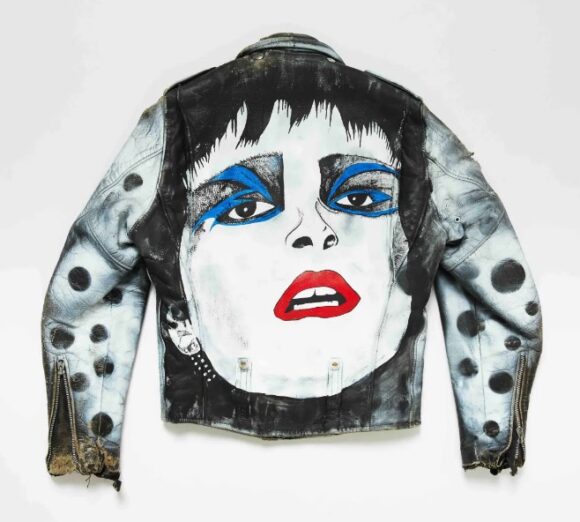
Hand-painted studiously on to the jackets, the badges and NME portraits feature Siouxsie c 1979: the gothic hurricane of Webster’s youth. But where her presence was once synonymous with punkish excitement and the thrill of rebellion, it is now a stand-in for everything that has passed. Art has enlarged Siouxsie into a memento mori.
So far, so down. The exhibition has tugged us deep into the artist’s mental shake-up and struck loud notes of desperation. But then, in its third act, it fills suddenly with light. And what should come riding to Webster’s emotional and artistic rescue but that eternally helpful artistic bestie: paint.
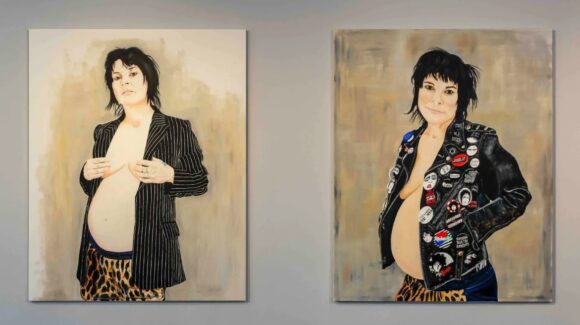
In the past couple of years she has begun painting fresh images of herself that show her beaming, smirking, posing with the old cockiness. Her sense of self has found a spring in its step again. And in all the images she’s pregnant.
In 2020, after several failed attempts, at the age of 52, she had a baby, a boy she called with nostalgic punkiness Spider. Early in the pregnancy she decided to record the process in photographs. The self-portraits that fill the show’s brightest room are based on those snaps.
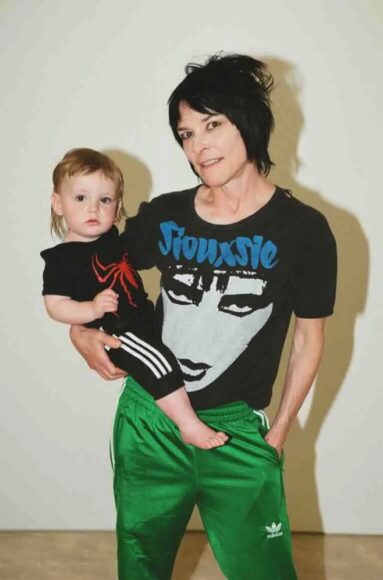
Against a light-filled background, in paintings that tower above you like the countesses painted by Gainsborough, she presents herself half nude, clad sparsely in the fashions that define her presence: leather jackets, stripy blazers, Adidas shorts.
Lightly painted, free of pictorial gimmickry, the cocky self-portraits bring a new tone, not just to her art but to British portraiture. A mouthy YBA has elbowed out the dames and the princesses from the staircase-sized British portrait and replaced them with a mascara-loving Leicester mum who’s had her problems but who refuses to grow old and loves Siouxsie and the Banshees. This isn’t just art. It’s a class war.
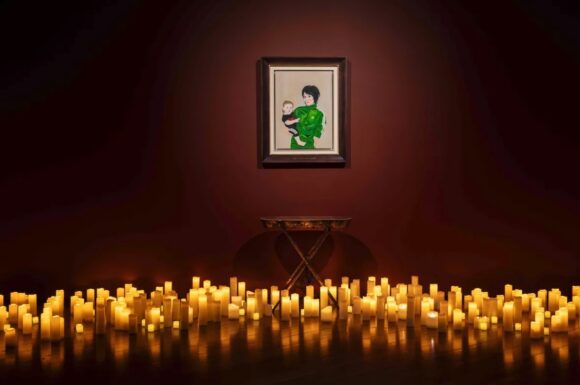
There’s a final surprise. In the show’s last room, lit subfuscously with candles, she paints herself with her baby, the two of them posed deliberately as a Madonna and Child. A show that has spent most of its length wrestling with unhappy teenage dilemmas ends on a soaring note of love, wisdom and maturity.