I don’t blame Tate Britain for seeking to lure hordes of Gen Xers into its empty halls with a show devoted to art and fashion in the 1990s. Every generation deserves to have its cultural impact examined seriously and positively, even Gen X. But to see it done as hopelessly, as awkwardly, as goddam wrongly as this will bring tears to the eyes of the decade’s real achievers and scorn to the lips of anyone who lives north of Watford. What a daft effort.
The 90s: Art and Fashion aims to tell us why the epoch was important and locate that importance in a productive union of art and fashion. The explanatory spiel, shouted from the walls of the show and the flashy pages of the catalogue, is that this was a time of exceptional cultural adventure when new freedoms were won and new territories liberated.
Every decade thinks these sorts of things about itself. You could argue exactly the same for the Sixties, the Seventies, the Eighties. If you were there and you were young you will always view your times with unrealistic fondness. To prove the claim you need to research deeply, argue meaningfully, historicise convincingly and arrange intelligently. None of which happens here.
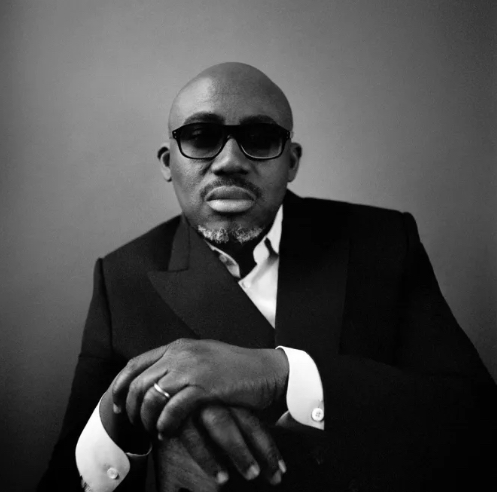
Instead, we get the show’s curator, Edward Enninful, a former editor of British Vogue, ranting on about how wonderful London was and remembering the fun of going to clubs, dancing at raves, attending fashion shows, cocking a snook. This entire event feels more like an enlargement of Enninful’s preferred lifestyle than a serious assessment of the decade’s cultural worth.
The central problem is the emphasis placed on fashion. What Enninful will probably never realise, because he’s too close to it, is that among the significant artforms fashion is the most prone to silliness. We see it proved beyond any reasonable doubt in the show’s central stretch: a twilit torture hall devoted to the Joan of Arc fantasies of the fashion designer Alexander McQueen.
Elsewhere in his oeuvre McQueen was fully capable of delicacy, elegance, grace. But with his Joan of Arc fantasies he plunged headfirst into a dark world of S&M textures and cruel cultural misogyny. To say nothing of the aforementioned silliness.
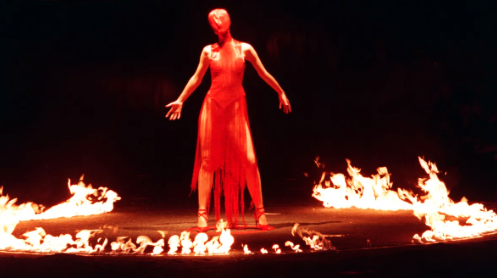
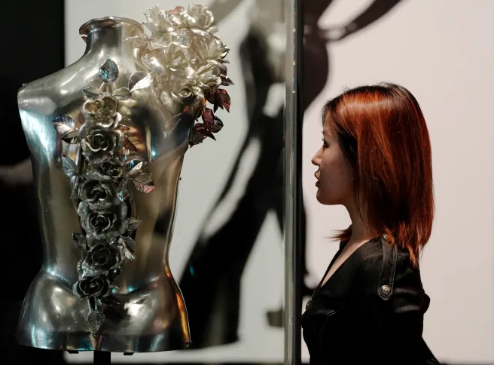
Thus we watch a wretched supermodel clad in a crimson onesie and a Spider-Man mask stepping into a ring of fire to be burnt. On the walls, in giant photos, McQueen, dressed as King Arthur, waves a huge sword and pretends to die bloodily in battle. Also in the room are the outfits he designed for the look, all made of metal, and all forcing the womanly wearers of the steel burqas and full-body chastity belts to encase themselves in iron.
It’s genuinely horrible. A tragic aesthetic collapse. And to make it all worse, the room is filled with the sinister wailing of the wind and what sounds like the screams of a populace being waterboarded. Only in the world of fashion could this misogynistic house of horrors pass for a cultural achievement.
Surrounding the catwalk of torture is an event that seems never to notice the right things. Those of us who also lived through the Nineties can easily remember a time of change: the YBAs came along; contemporary art stopped feeling invisible; the Turner prize caught fire; the groundwork was laid for Tate Modern; Manchester became a noisy cultural hub; Glastonbury became the place to go; Pulp arrived; Oasis arrived; Richard Rogers, Norman Foster and James Stirling changed the architectural face of Britain. It was a period of tangible achievement. But none of that is noticed properly or celebrated meaningfully here.
The YBAs pop up at intervals, but in a manner that feels token. Rachel Whiteread, whose seminal urban installation House not only won her the Turner prize in 1993 but kickstarted a huge new public interest in contemporary art, is represented by the inside of a hot water bottle cast in plaster. It’s like commemorating the building of Tate Modern with a thimble of cement.
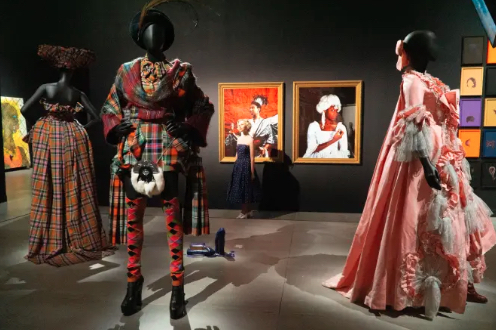
Most YBAs are ignored, while those who feature are placed in contexts that undervalue and misrepresent them. Instead, we get reams of fashion photography consistently proving how self-centred fashion can be with its seemingly endless displays of pouting, preening, posing. Even the scenes of Haçienda dancing that take us briefly away from London feel as if they are noticing a severely limited range of human moods.
The word that kept ringing in my head as I wept my way round this miserable darkness was “narcissism”. It was everywhere, disfiguring every insight. Certainly, it was present in the impact of the show’s curator. Not only has Enninful singled himself out on the cover of the catalogue, he’s even managed to shove the Tate Britain’s director, Alex Farquharson, out of the foreword slot and replaced him with himself. In all my decades of Tate catalogue reading, never before have I seen a curator push themselves before the director.
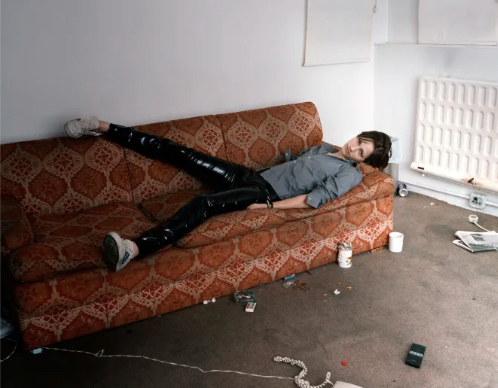
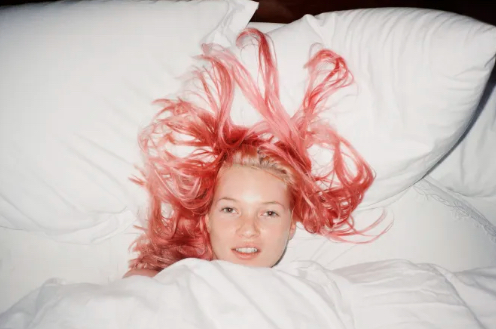
So what’s salvageable? Well, the odd artwork survives the battle. Some of the black artists picked out for attention — Sonia Boyce, Maud Sulter, Yinka Shonibare — are too good to be overwhelmed by the screamy context. Sarah Lucas withstands her fashion bath. The ubiquitous Kate Moss can’t help but be watchable. And it was good to see Corinne Day being given her flowers for she was, indeed, a genre-changing photographer.
But these good moments are merely the odd ones out in an event so full of missteps it’s fair to call it a disaster.
The 90s: Art and Fashion is at Tate Britain, London, to Feb 14